

Why M.E.P. Systems Matter More Than You Think in Modern Buildings
Walk into any well-designed building and the first things you notice are the obvious ones, the lighting, the layout, the finishes. What you don't notice, if it's done right, is everything running behind the walls and under the floors making all of that actually work. That's M.E.P., mechanical, electrical, and plumbing, and it's usually invisible right up until something goes wrong.
That invisibility is sort of the whole point, though. Good M.E.P. work isn't meant to be noticed. It's meant to just quietly keep a building comfortable, safe, and functional every single day, without anyone inside it ever having to think about how that's happening. Here's what M.E.P. actually covers why it matters more than people assume, and what happens when it's treated as an afterthought instead of part of the plan.
What M.E.P. Actually Covers
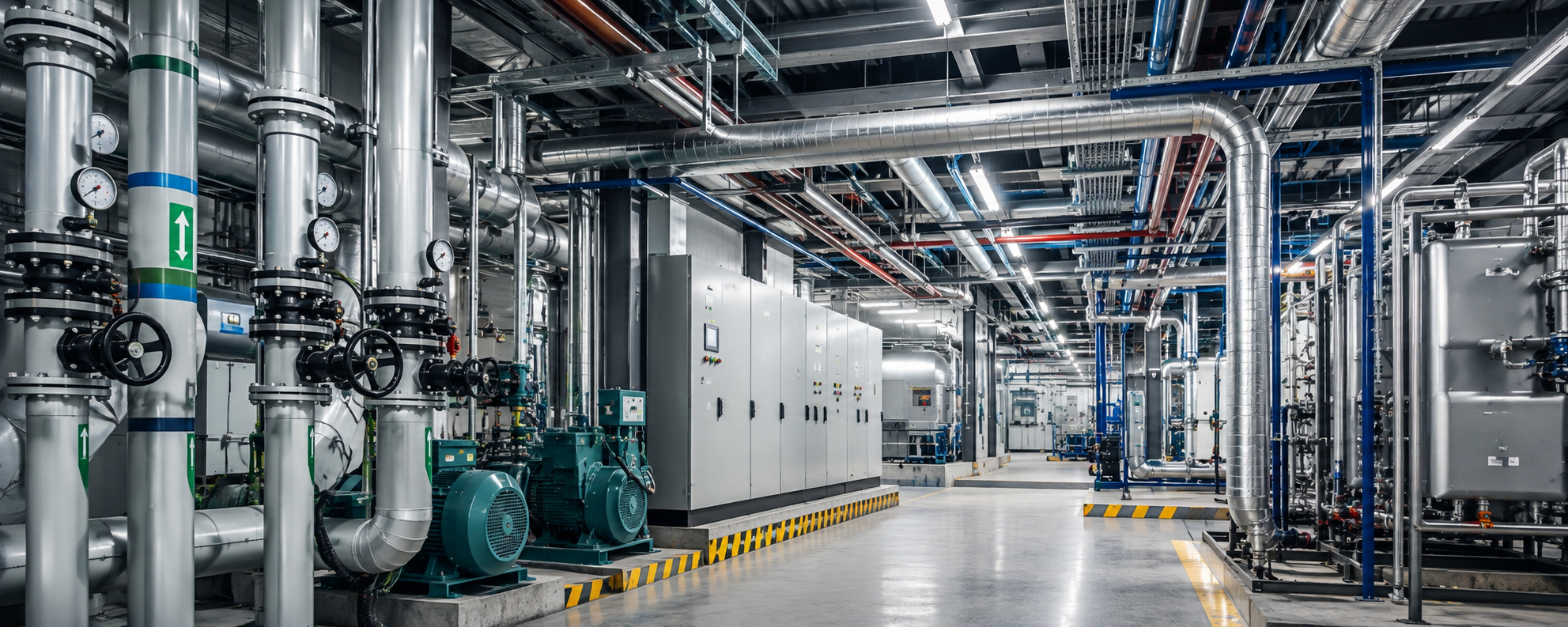
M.E.P. sounds technical, but it breaks down into things everyone interacts with constantly without thinking about it. Mechanical covers heating, cooling, and ventilation, basically everything that keeps the air inside a building comfortable and breathable. Electrical covers power distribution, lighting, and all the wiring that keeps everything running safely. Plumbing covers water supply, drainage, and everything in between.
None of these systems work in isolation, either. They're designed to work together, which is exactly why they're grouped under one discipline instead of being handled separately by whoever happens to be available. A ventilation system, for instance, often depends on electrical planning to run efficiently, and plumbing routes frequently have to be coordinated around both. Treating them as three separate afterthoughts, rather than one connected system, is usually where things start to go wrong.
Why It's Easy to Underestimate
The problem with M.E.P. is that it's genuinely hard to appreciate until it fails. Nobody walks into a building and admires the ductwork. Nobody compliments the electrical panel. It only becomes the center of attention when the air conditioning stops working during a heatwave, or a pipe bursts somewhere it shouldn't, or the power flickers during something important.
Because of that, M.E.P. planning sometimes gets treated as a formality, something to check off rather than something to actually think through. That's usually where problems start, not because anyone's being careless on purpose, but because the value of good planning is hard to see until the bad version shows up. It's a strange kind of work in that sense, the better it's done, the less anyone thinks about it, which makes it easy to underfund or rush during a project timeline.
This is especially true in fast-moving construction schedules, where the visible finishes tend to get the attention and the budget, and M.E.P. gets treated as something to sort out once everything else is decided. By the time that happens, the flexibility to design it properly is often already gone.
What Happens When M.E.P. Is an Afterthought
Skipping proper planning doesn't usually cause an immediate problem, that's what makes it risky. Systems installed without enough thought tend to work fine at first, then start showing issues once a building is actually being used the way it was designed for.
Undersized electrical systems struggle once real usage kicks in, especially as more devices and equipment get added over time. Poorly planned ventilation leaves some rooms too hot and others too cold, with no easy fix once the ductwork is already in place. Plumbing that wasn't properly mapped out leads to pressure issues or leaks that are far more expensive to fix once they're built into the walls.
And because most of this is hidden infrastructure, fixing it later almost always means undoing finished work to get to it, which is neither cheap nor quick. A wiring issue that would have taken an hour to correct during construction can take days once it's buried behind finished walls and flooring. That gap in cost, between fixing something early versus fixing it after the fact, is usually where the real damage happens.
Why Getting It Right Early Actually Pays Off
The flip side of all this is that M.E.P. done properly from the start tends to just disappear into the background, in a good way. Comfortable temperatures without thinking about it. Reliable power without flickering. Water that works the way it's supposed to, every time, without anyone needing to give it a second thought.
It also tends to be more efficient long-term. Properly planned systems use energy and water more effectively, which shows up as lower utility costs over time, sometimes significantly so once a building has been running for a few years. And because everything's coordinated from the beginning instead of patched together, there's a lot less risk of systems fighting each other or leaving gaps that show up later as problems.
There's also a safety dimension that's easy to overlook. Properly planned electrical and plumbing systems reduce the risk of the kind of failures that aren't just inconvenient, but genuinely hazardous. That alone makes early, thoughtful M.E.P. planning worth the investment, well before efficiency or cost savings even enter the conversation.
Conclusion
M.E.P. systems rarely get credit for the buildings that work well, which is honestly a sign they were done right. It's only when something fails that people start paying attention to what's actually running behind the scenes.
Getting M.E.P. planning right from the start, rather than treating it as something to figure out later, tends to save a lot of money, hassle, and inconvenience down the line. It's not the most exciting part of a building, but it might be one of the most important, and the buildings that get it right are usually the ones nobody ever has to think twice about.