

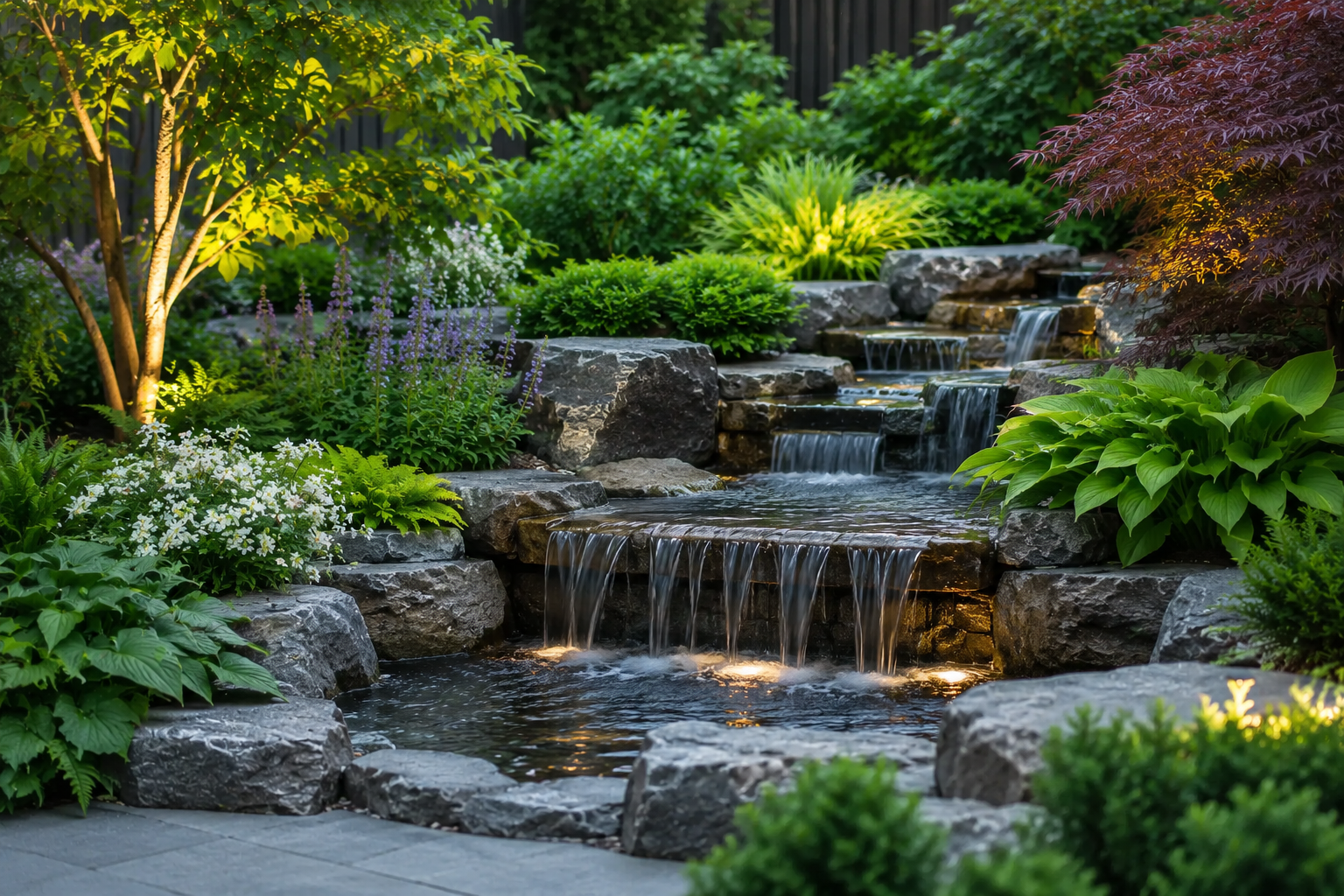
Why Beautiful Outdoor Spaces Don't Happen by Accident
Every gorgeous backyard you've ever scrolled past on Pinterest, the one with the perfect layout, the healthy greenery, the water feature that somehow looks both relaxing and expensive, someone thought that through. Behind every outdoor space that comes together well, there's usually a decision made early on, one nobody notices once everything's finished. It's rarely one big move either. It's a series of smaller ones, made in the right order, that end up adding up to something that feels effortless.
That's really what separates a yard that looks nice for a season from one that stays beautiful for years. It comes down to a handful of choices, landscape design, irrigation, drainage, and a few details most people only think about once they're missing. None of it requires an unlimited budget. It requires the right things being handled in the right order, with enough thought put into each one. Here's what tends to make the real difference.
Start With a Plan, Not a Plant List
It's tempting to begin an outdoor project by picking out plants, maybe a tree here, some flowers there. But the yards that actually come together well usually start somewhere else entirely, with a plan for how the space will be used day to day.
That means thinking through sunlight, foot traffic, and how water moves across the yard before a single plant goes into the ground. It also means being honest about how the space will actually be used, whether that's hosting people on weekends, giving kids room to run around, or just being somewhere pleasant to sit with a coffee in the morning. A design built around real use tends to hold up, because it was never guessing in the first place.
When a landscape is designed this way, everything tends to work together instead of feeling like it was added piece by piece over time, which is a big part of why it ages so much better. Plants get placed where they'll actually thrive, walkways end up where people naturally walk, and the whole yard starts to feel intentional instead of assembled.
Why Irrigation Matters More Than You Think
Even a well-designed landscape struggles without the right watering behind it. This is where a lot of yards run into trouble, usually because watering was left to guesswork instead of any real plan. A sprinkler running on the same schedule all year, regardless of season or weather, is one of the most common reasons a well-planned yard still ends up patchy or overgrown in places.
An auto irrigation system solves this in a way manual watering rarely can. It waters based on actual conditions rather than habit, which means healthier plants, a lawn without random dead patches, and one less thing to remember every day. It also tends to save water in the process, since it's not running on assumption the way a manual schedule usually is.
A yard that looks effortless is often running on a system doing the work in the background. Nobody sees the controller or the scheduling behind it. They just notice that the grass looks good and the garden beds never seem stressed, which is exactly the point.
Water Features Need More Planning Than People Expect
A well-placed water feature can turn an ordinary yard into somewhere people actually want to spend time. There's something about the sound of moving water that makes a space feel calmer and more finished, almost like it gives the whole yard a focal point to build around.
The catch is that water features are unforgiving when they're rushed. The pump has to be sized correctly, the filtration has to keep up, and the whole setup has to be built to last rather than pieced together and hoped for. Small oversights here don't stay small for long, an undersized pump struggles constantly, and weak filtration turns clear water green within weeks.
Get that right, and it becomes the spot everyone gravitates toward. Get it wrong, and it turns into something you're constantly fixing instead of enjoying.
The Infrastructure Nobody Sees Until It Fails
This is the part that rarely gets a second thought, drainage, outdoor electrical, plumbing, everything buried under the parts people actually notice. None of it is glamorous, but it's often the reason a beautiful yard stays beautiful, or slowly stops being one.
Poor drainage leads to standing water and eroded soil over time, and eventually, in worse cases, water finding its way toward a home's foundation. Skipped electrical or plumbing planning tends to surface later as safety issues or expensive rework, especially once it's buried underground and harder to reach. None of this shows up in photos, yet it usually determines whether a yard holds up for years or starts having problems within one.
Conclusion
Beautiful outdoor spaces come down to a series of decisions made early and well, landscape design, irrigation, and the infrastructure underneath all of it. When those pieces are handled properly, the result looks effortless, even though a fair amount of thought went into getting there.
If an outdoor space isn't quite living up to its potential, the fix is rarely starting from scratch. More often, it's a matter of getting the right pieces working together the way they were meant to.